Opinions are all my own

  • The chasm between IT and “the suits” remains wide and deep

    My work is the management of a decidedly mixed marriage. The business I oversee, which is part of an advertising agency (filled with your more traditional businesspeople), is chiefly populated by technologists. And we know how well these two groups get along. So it is my delight to report that for the most part, we all get along quite well, thank you. Visit us and you’d see a surprisingly high level of respect and productive collaboration between these two very different types of information workers.

    Good thing, too. That’s what sets us apart in the interactive marketplace.

    I bring this up because a friend, who is a very gifted programmer, had the following as his IM greeting today. It’s a link to a blog entry showing dramatically how wide and deep the chasm still is between the IT world and the “business world.”

    The blog entry itself was interesting, and illustrates this ongoing mistrust. Moreover, the long list of comments it generated, which runs below the entry, starkly documents the passion of opinions on both sides. Man, the anger!

    Every day I see the incredible things that can be accomplished when professionals of both disciplines work together. For this reason, I’m particularly saddened that much of the rest of the world has not yet found a way to agree on something that seems obvious:

    Both parties — “techies” and “suits” — are invaluable.

  • Two good resources to prepare yourself for the next 10 years

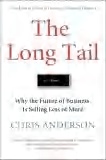
    Thanks to Seth Godin for reminding me today that many readers may have missed the The Long Tail by Chris Andersonhoopla on Chris Anderson’s long-awaited book, aptly titled The Long Tail. This is an important book for those interested in the future of marketing and business design. It reports on a paradigm shift that we all need to get our heads around, in a similar way that The 1-to-1 Future was good intellectual grounding for what was to come, when it arrived on the scene in the mid-1990s.

    You can find other support for your studies on the Long Tail Squidoo lens. And for this resource as well I have Seth Godin to thank. He is the original “squid” of this fascinating and fast-growing user-generated reference site.

  • Quad Graphics buys a cool company

    Success begets success. So I was not surprised when I learned this week that Quad Graphics has purchased a controlling share of OpenFirst. The company provides direct mail and digital printing solutions, but what has impressed me about them, ever since they formed ten years ago (under the name EPS) is their slavish devotion to database integrity.

    I met the company’s president and CEO, Robert Kraft, shortly after they opened their doors, and what wowed me were stories about how they convert, merge and scrub the databases they use … as well as other ways that they use data, which I’ll get to in a moment. It should be common sense, but the programming and safeguarding that Robert described to me was something so thorough and ironclad that one might think he was talking about a nuclear power plant instead of a digital printing company. The reason for that is their chief technical officer, Chuck Olszewski. He’s an engineer who came to OpenFirst from the nuclear power industry. The guy is trained to prevent meltdowns … Exactly what a pricey and time-sensitive direct marketing program needs.

    Okay, I know I’m gushing a bit, so I’d better give you an example of what impressed me back then, and still blows me away today. OpenFirst uses something called dataglyphs for at least one of their direct mail clients. It’s a way to embed a great deal of data, encrypted in a photograph or other screened graphic. This data is invisible to any observer other than a properly tuned scanner. To you or me, the photo looks perfectly normal.

    What’s more, if you tear, stain or otherwise damage the image, you can still retrieve the data. Check out this dataglyph demo from PARC Research. You’ll be invited to use Photoshop, Paint or some other program to compromise the graphic that you create, and then see how accurately it pulls out and reports that graphic’s hidden contents. Incredible!

    This application, which was originally created for the whole cloak-and-dagger-cold-war-passing-of-secret-information thing, is used by OpenFirst for a client who needs to get back from consumers information about them that is only available for use once the consumer has responded to a mailing. It’s a long story about how mailing list companies only consider their client owners of their data once the people on the list respond the direct mail message, but suffice it to say that this clever and private passing of data saves mailers a boatload of money.

    And hey, it’s really cool.

    Congratulations to OpenFirst. You’ve earned this opportunity to make yourselves and Quad Graphics shine even more brightly!

  • Make email copy long enough to tell the story

    Legend has it that President Lincoln was asked how long a soldier’s legs must be to qualify for his Union army. His answer: “Long enough to reach the ground.” Whether this is true or not is unclear, but the truth behind it can be applied to a subject of heated debate: The copy length of marketing emails.

    Melinda Krueger’s latest column addresses the debate with an extremely well-reasoned approach. She writes:

    Use as much copy as needed to give readers all the information they need without a preconceived notion of what the “right” amount is. In some cases, you will get fewer clicks but more conversions (sales, donations, leads) from more copy-intensive e-mails, as they deliver more pre-qualified buyers.

    She goes on to provide great tips for breaking up longer email copy to make it seem less daunting. Her point is right on, though. Don’t fret over the length of your email copy. Instead, make sure it is optimized for clarity, brevity (to the extent possible) and excitement.

    Finally, don’t forget to test, test, test!

  • Portable marketing is ultimately about place

    I attended a seminar on portable marketing yesterday, and was interested to learn that the most popular promotions using mobile phones are still using SMS — i.e., text messaging. I wonder, for instance, when the sending of photos or videos from our phones will figure into large promotions.

    We were presented with several examples of promotions where texting was a major component.

    In the more exciting of them, the key to success was the place where the user participated. In other words, it wasn’t just that the participant could play a game or request information from anywhere, it was that they could do it somewhere quite specific. For instance, the Van’s Warped Tour is offering the ability to get news on band line-ups and autograph opportunities via your cell phone. According to Cingular, the sponsor, participation so far is over 100,000 messages sent. All branded, I’m sure, with Cingular enticements.

    And what could be more place-based than to be updated with what’s happening on the grounds of the very festival you’re milling about in?

    Text Message Enabled ChandelierThat reminded me of what is still my favorite “place-based” mobile device. It’s a beautiful spiral chandelier that spells out the messages of people congregating under it, in animated, LED lettering.

    Probably the only reason we haven’t seen more of this type of display is the demographics of texting. By far the biggest users of text messaging in this country are those under the age of 30. Two-thirds of all frequent text message users are between the ages of 15 and 35.

    Which means that unless you’re organizing a very high-end prom, or are filming an episode of MTV’s My Super Sweet 16, this device isn’t going to be a hit. You might as well hang a disco ball.

    But I suspect the demographics will change fast. Especially with more executives of all ages using cell phones with QWERTY keyboards and large displays. I predict that it won’t be too long before I find myself under one of those chandeliers or something like it, watching the guests reveal — via SMS messaging — declarations of their silver wedding anniversaries and not their high school’s supremacy.