Dorcas Alexander wrote on the Luna Metrics blog recently about an important and often-overlooked topic: Organizing the campaign information you can gather in Google Analytics. I’m following up here with a way to document your campaigns. This method also solves the problem of constructing the special URLs used to create those campaigns in the first place.
If that seems a little opaque to you, read on. I suggest you start with this excerpt of Dorcas’ post:
It’s so easy to tag your campaigns for Google Analytics that you can quickly fill your reports with a mishmash of labels and end up with campaign tag soup! But what’s the best way to get organized? Even if you know what medium and source mean, it’s not always obvious how you should fit campaign info into those slots. And what about the extra slots we get for campaign tags like campaign and content and term?
It goes on to list four simple steps to preventing confusion. The fourth discusses documenting your work. It recommends how — by setting up a Google Docs spreadsheet, which can be shared among all content or analytics team members. He goes on to say, “Another good thing about using a spreadsheet is that a formula can pull all your labels together into a campaign-tagged URL.”
That’s a great idea, but how exactly can this be done?
Here’s my how-to, an addendum to that Luna Metrics post.
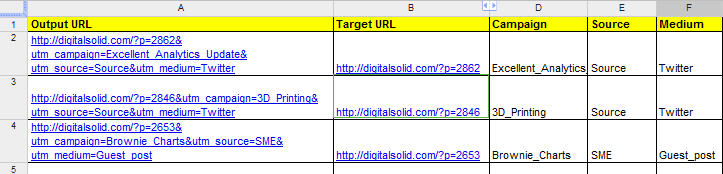
Above is the Google Spreadsheet I created for a former client (I needed to stop working with them when I joined Accenture). I’ve replaced the live information they were using with some of my own, to protect confidentiality. I’ll assume you already know how to set up a free Google Docs account, which includes the use of their cloud-based Excel competitor, named Spreadsheet.
- Create five columns: Output URL, Target URL, Formula, Campaign, Source and Medium. But wait!, you say. Where is that third column? It’s the Formula column, and is hidden here. I hid it because, a.) It looks identical to Output URL when you have live data in there, so it was redundant, and b.) I prefer to keep it hidden because each cell of that column contains the same formula — one that you definitely don’t want to accidentally change or delete. If I were setting up the system in Excel, I’d make those cells protected.
- Before “hiding” column C, place this formula in it:
=((((((((B2&IF(ISERROR(FIND(CHAR(63),B2,1)),"?","&"))&"utm_campaign=")&D7)&"&utm_source=")&E2)&"&utm_medium=")&F2))This formula confirms that the target URL (in cell B2) does not already contain a question mark in it. If it finds one already, none will be added. If it finds no question mark, it added one. After that it builds a trailing URL string that will be familiar to those who roll their own URLs, or use Google’s URL Builder. Once you’re done you’re safe to highlight the column and hide it. - In the Output URL column, place a far smaller formula:
=C2Yes, that’s all. Just display the contents of the hidden cell C2 in the visible cell B2. - Populate the Target URL cell in that row with the web address of the landing page you want to tag with campaign information.
- Finally, fill in the Campaign field, along with the Source and Medium fields. These are the unique names of the campaign you wish to credit that visit to, along with the web site or social app it was came from (e.g., Twitter, or Jason Falls’ Social Medial Explorer blog), and the general medium (e.g. social, or web).
That’s it! In the Output URL you’ll find the line. Copy it, and paste it wherever you are setting up a hyperlink on another site or digital channel. For example, that top line shows the URL I used when I was Tweeting about my recent blog post extolling the new release of an Excellent Analytics upgrade.
In the rows to the right of those I’ve shown, you can make notes about when it was used, why, and how you promoted the link. All of this can be helpful when you pull the campaign, source and media statistics for analysis.
I hope this helps. Let me know what improvements you might have experienced in how to catalog your campaign information.
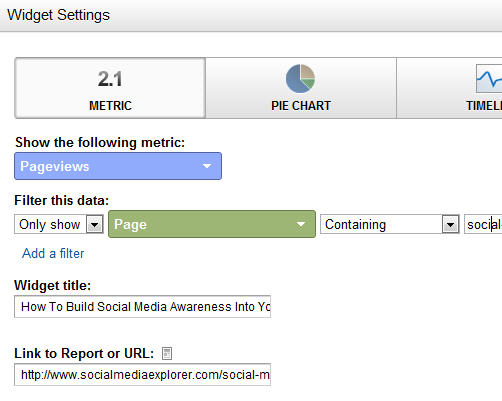
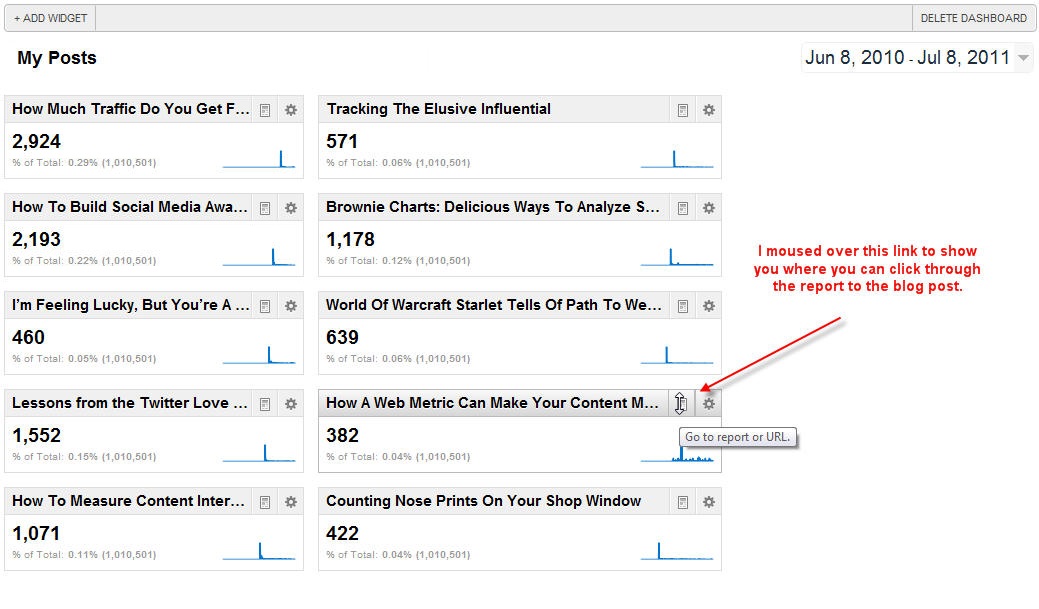
 This last one isn’t readily apparent. I’m going to assume you know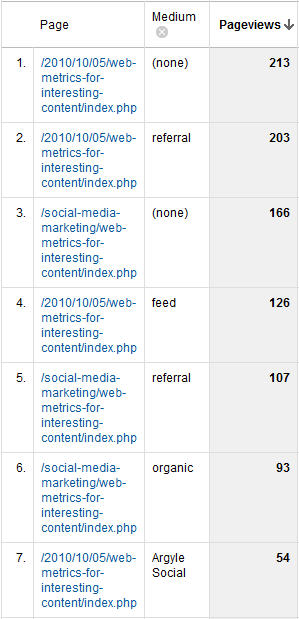

 But as I mentioned in my post on Jason’s blog site, and yesterday, at a