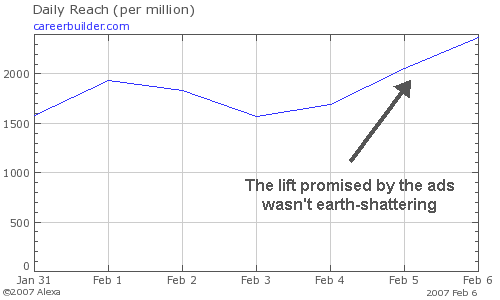
Memes are ideas that spread like viruses. Some are more contagious than others. What makes an idea contagious is a quality that makes people want to share it. Memes must also be memorable — they have to stay with their “host” long enough to spread. A common cold wouldn’t be nearly so common if it didn’t last long enough in our bodies for us to sneeze or cough. It’s the same with memes. They don’t have to live in us forever in order to be successful, but they do have to find a host and take it for a ride.
In order to be memes, ideas have to be sticky.
An example of a sticky idea that has come and gone is that Elvis Presley is still alive — that his death was faked. Another, which is leaving our consciousness in half lives, is that Halloween trick-or-treating is dangerous because of rampant poisoning of the candy being given out. Did you realize that this was an urban legend? This meme — or sticky idea — reached its apex in the 1980s and drained Halloween of a lot of its fun for subsequent generations of kids.
Sticky ideas are the tools of the trade for marketers. They are of particular importance to interactive marketers, since email and other online communcation can spread a meme like wildfire. Stickiness can make selling a product that much easier. Here are two ideas, one sticky, one not-so-much. They both deal with our immune system:
- Zinc in lozenge form can help our immune system by interrupting the virus that causes a cold, thus preventing it or lessening its severity
- Probiotics in foods like yogurt can strengthen the immune system and fight things like upper respiratory infections, since healthy bacteria in the gut are part of our body’s natural system for fighting disease
These are two ideas about staying healthy. Both have the support (in terms of communicating the idea and selling products) by major food and drug companies. But only one of them was sticky enough to be the topic of conversation yesterday, when I was walking to lunch with a couple of business associates.
I don’t think it’s an accident that we were talking about lozenges and not yogurt. The idea that a lozenge can help you feel better — especially with a new, exotic ingredient (zinc) — resonates.
On the other hand, eating yogurt, or taking a pill, with live bacteria in it? As a way to stave off illness? Yuck. It may be true, but it doesn’t stick. I’ve heard this concept for years, but I still don’t think it’s going to catch hold in a big way. Probiotics may continue to grow in sales, but I’m putting my money on zinc.
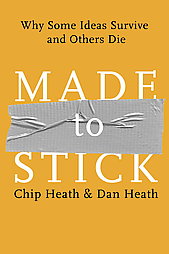 Those ideas were built into the product. You can’t do much to change their stickiness. But many can be altered, like an engineered microbe, to better connect with an audience. This is the theme of a book by the Brothers Heath (not to be confused with be-bop jazz greats The Heath Brothers). The book is called Made To Stick: Why Some Ideas Survive and Others Die.
They contend there are six aspects to a sticky idea:
- Simplicity — Is it easy to grasp? (“A mineral we don’t get enough of in our foods can cure our cold …”)
- Unexpectedness — Like a joke, does it have a punch? (“… and it’s zinc!”)
- Concreteness — Does it draw a clear picture? (“… which you can buy in lozenge form.”)
- Credibility — Can you believe it? (“I’ve heard it’s based on clinical trials …”)
- Emotions — Does it make you feel something? (“Even if it doesn’t work, it’s just good to feel like I’m doing something about colds …”)
- Stories — Can it be verbalized? (“… and I think it does work. I started taking zinc just when I was starting to feel a cold come on, and it lasted just three days!”)
Probiotics don’t stack up nearly as well on the stickiness meter. I give the yogurt wheeze high marks for #2 and 4, but medium or low marks for the rest. Especially #5, Emotions, which I think is a key to a sticky idea.
The fact is, no one likes to think much about their lower digestive tract. A finely tuned gut may make you healthier and happier, but please, keep it to yourself, buddy. I’m trying to eat.
The next time you face a marketing challenge, use this checklist to ensure your marketing proposition has what it takes to spread virally. Although I find the Brothers’ Heath list one that was designed as much to fill a book as it is to exhaustively explore stickiness, your idea cannot go wrong if it scores high for all six criteria. It will become sticky, and earn the right to be called a meme.
 Voice recognition seems to be a theme in my life lately. I just finished setting up
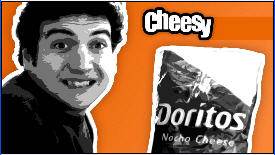 Doritos tore a page from the new media playbook. They announced the challenge under a tight deadline — late last year — and opened the videos to American Idols-like voting, thus absolving themselves of responsibility for a bad choice. In an additional, shrewd move, they ran the winner early enough in the game to call it “world’s first fan-produced Superbowl ad.” The winning ad was only so-so in effectiveness — unless you consider the ad’s budget and production timeline (two digits and four days).