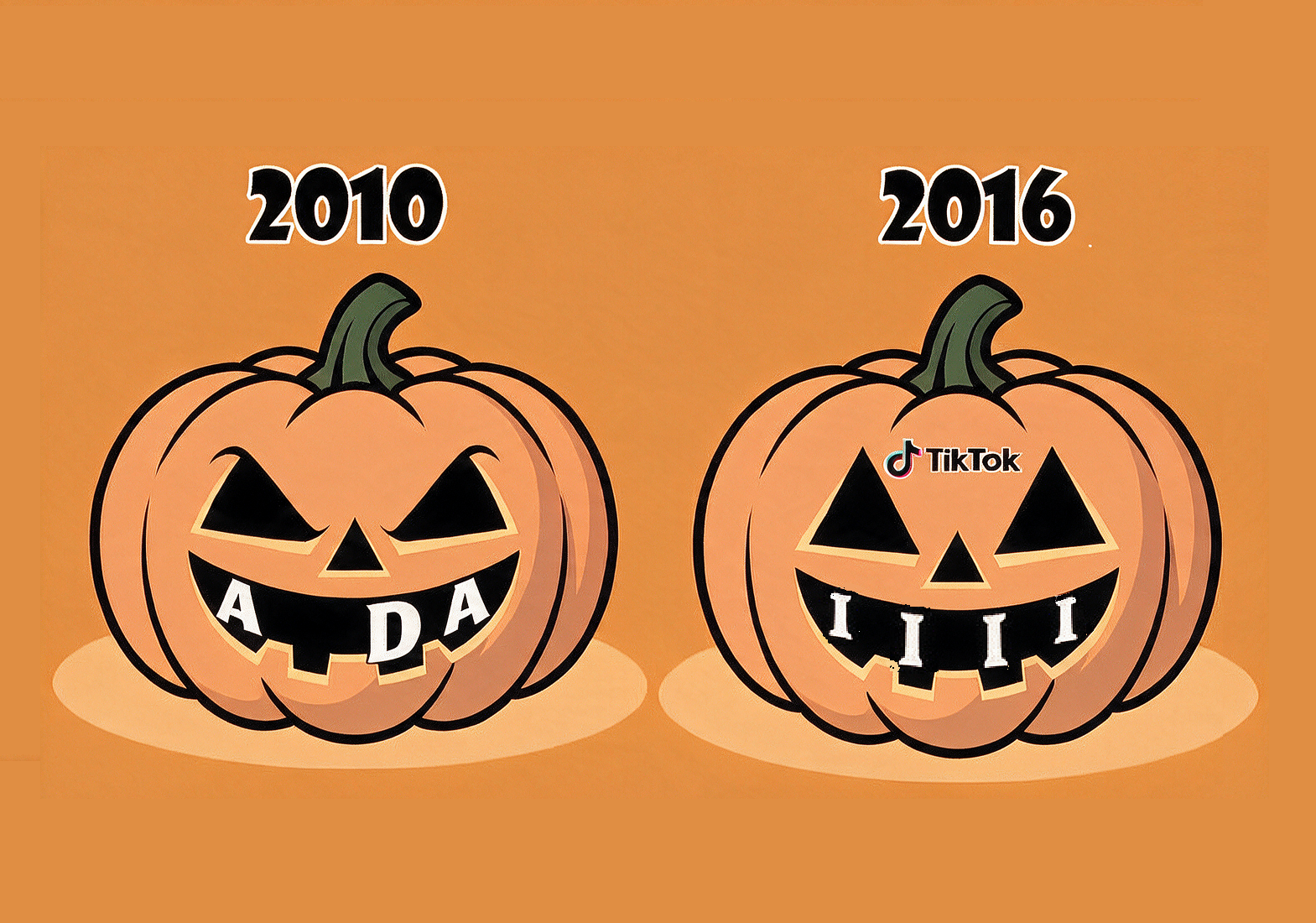
A spooky tale about a dead metric rising from the grave to take over the world
This 2010 blog post of mine, Content Interest Index is the “missing link” in web analytics, outlined a novel metric that fills a measurement gap in a sales journey. Six years later, TikTok was launched with an algorithm that preforms precisely this measurement. And does it brilliantly. Here’s the story of my quest, and what it teaches us about finding and filling innovation gaps.
I outlined the business case in an earlier post. It described why Content Interest Index (CII) needed to be invented:
The first marketing class I ever had in college taught me the AIDA model of advertising. It’s still used today, lo these many years later. The AIDA model goes like this: [To make a sale,] once you attract Attention, you must generate Interest, create Desire, and enable your market to take Action. Do all of those things and you’re golden.
Back then the only way you could actually measure any of these (except for the last A, which was making a sale) was by employing expensive and time-consuming research. The web changed all that. It allows us to measure each of these steps — except for that pesky thing called Interest.
When I posted that I was leading a team of web developers. Using Google Analytics 1.0, I added client-side instrumentation to measure proxies for the interest levels of visitors in the pages of a financial institution’s website. Those proxies included how many people shared a page, bookmarked it (a thing back then), or sent it to PDF for printing.
With those behavioral proxies we hoped to calculate the comparative “interestingness” of this client’s content. Unfortunately our contract expired and I was never able to analyze the results and calculate the likelihood of CII to predict entering a conversion funnel (Desire) and achieving an online conversation (Action).
I soon moved on from that agency, and also concluded the client-side instrumentation available at the time would never provide enough of a signal to be useful. I considered CII a dead metric.
Then came TikTok.
The breakthrough of ByteDance was using newer, real-time technology to create an app that leveraged its own proxies for interest, and prioritized them in a scoring model that could revise itself in milliseconds.
According to this Wall Street Journal investigation into TikTok’s secret — and extremely addictive — algorithm, the app prioritizes engagement signals including likes, follows, and watch time. Most notably, “We found that TikTok only needs one of these to figure you out: How long you linger over a piece of content.”
They found what many of us have experienced firsthand: Within minutes of lingering even slightly longer on a particular video type, TikTok adjusts your feed to show more similar content.
This methodology became a blueprint. Meta adopted similar interest-duration models, and within years, interest measurement became the industry standard. In January, TikTok formalized its U.S. operations with an investment group, valuing the platform at approximately $14B USD, a vindication of the algorithm’s effectiveness.
The Takeaway for You: The AIDA model had a digital analytics blind spot, and for years, we couldn’t find a way to fill it. Rather than accepting that limitation, I tried to bridge the gap.
You likely face similar blind spots in your current behavioral analytics work: metrics you can’t measure, customer signals you can’t track, or questions your tools can’t answer. That gap is where innovation lives. When you find it — and have the persistence to investigate — you may be creating the next industry-standard metric.